Let’s clear something up right away: melanin is powerful, but it’s not a force field and sunburn on black skin in Georgia is 100% possible.
There’s a long-standing myth that Black skin doesn’t burn, and while it’s true that higher melanin offers some natural protection, it doesn’t make you immune to sun damage.
Year-round sunshine, sunburn on darker skin tones is very real – it just doesn’t always look the way people expect.
So if you’ve ever wondered, “Is this a sunburn or something else?” – you’re in the right place.
Can Black Skin Really Get Sunburned?
Melanin does provide a natural SPF (roughly around 13), which helps absorb and scatter UV rays. But Georgia’s UV index – especially during spring and summer – can easily overwhelm that protection.
That means prolonged sun exposure can still lead to:
- Sunburn
- Skin damage
- Hyperpigmentation
- Increased risk of skin cancer
The difference? The symptoms may be less obvious – but no less important.
What Sunburn on Black Skin in Georgia Looks Like
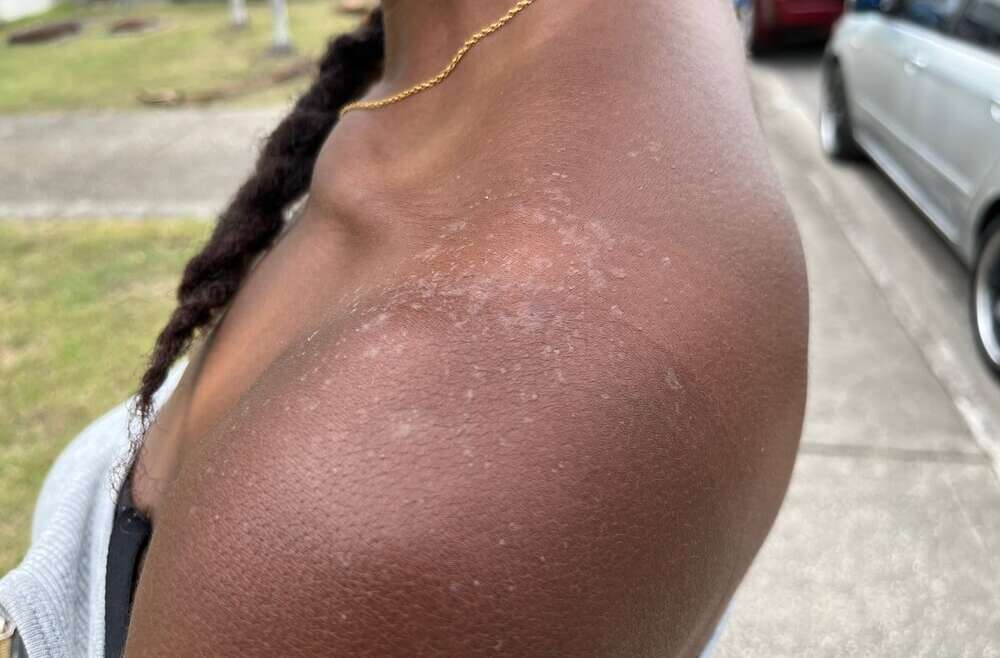
Here’s where things get tricky. Sunburn on Black skin doesn’t usually show up as bright red skin like it does on lighter tones. Instead, look for these signs:
- Warm or hot skin to the touch
- Tenderness or sensitivity, especially when touched
- Darkening of the skin (not redness)
- Tightness or dryness
- Itching or irritation
- Peeling after a few days
In more severe cases, you may notice swelling or even small blisters – but often, it’s subtle enough to miss until discomfort sets in.
How to Protect Melanin-Rich Skin in Georgia
Living in Georgia means sunshine is part of the lifestyle – but protection doesn’t have to be complicated.
Here’s five ways on how to keep your skin healthy:
- Wear sunscreen daily: Look for a broad-spectrum SPF 30 or higher. Yes, even on cloudy days. Pro tip: choose formulas labeled “sheer” or “no white cast” for a more natural finish on darker skin tones.
- Reapply more than you think: If you’re outdoors, reapply every 2 hours – or more often if sweating.
- Seek shade during peak hours: The sun is strongest between 10 a.m. and 4 p.m. If possible, plan outdoor activities earlier or later.
- Wear protective clothing: Wide-brim hats, sunglasses, and lightweight long sleeves can make a big difference.
- Don’t forget easy-to-miss areas: Ears, lips, hands, and the tops of feet are common spots for unnoticed sunburn.
What to Do If You Get Sunburned
If you suspect a sunburn on black skin, act quickly to soothe and protect your skin:
- Cool the skin with a gentle, lukewarm shower
- Moisturize immediately with aloe vera or fragrance-free lotion
- Stay hydrated to support skin recovery
- Avoid further sun exposure while healing
- Skip harsh products like exfoliants or active ingredients
When to See a Dermatologist for Sunburn on Black Skin
Sunburn on black skin can look different, and it’s easy to overlook signs of deeper damage.
You should seek medical advice if you notice:
- Persistent discoloration
- Severe tenderness or swelling
- Blistering
- Skin changes that don’t improve
A dermatologist can assess your skin and recommend treatments to prevent long-term effects like hyperpigmentation.
Protect Your Skin with Expert Care at Acworth
At Acworth Dermatology & Skin Cancer Center, patients receive expert care tailored to all skin tones – including melanin-rich skin. From sun damage prevention to treating discoloration and skin concerns, their team focuses on keeping your skin healthy, protected, and thriving.
If you have concerns about sunburn, pigmentation, or overall skin health, don’t wait.
Call 678-505-8030 or contact us online to schedule your visit with Dr. Johnathan Langston Chappell, a double board-certified dermatologist and Mohs surgeon.
Glowing skin isn’t just about looking good – it’s about protecting what makes it strong.