


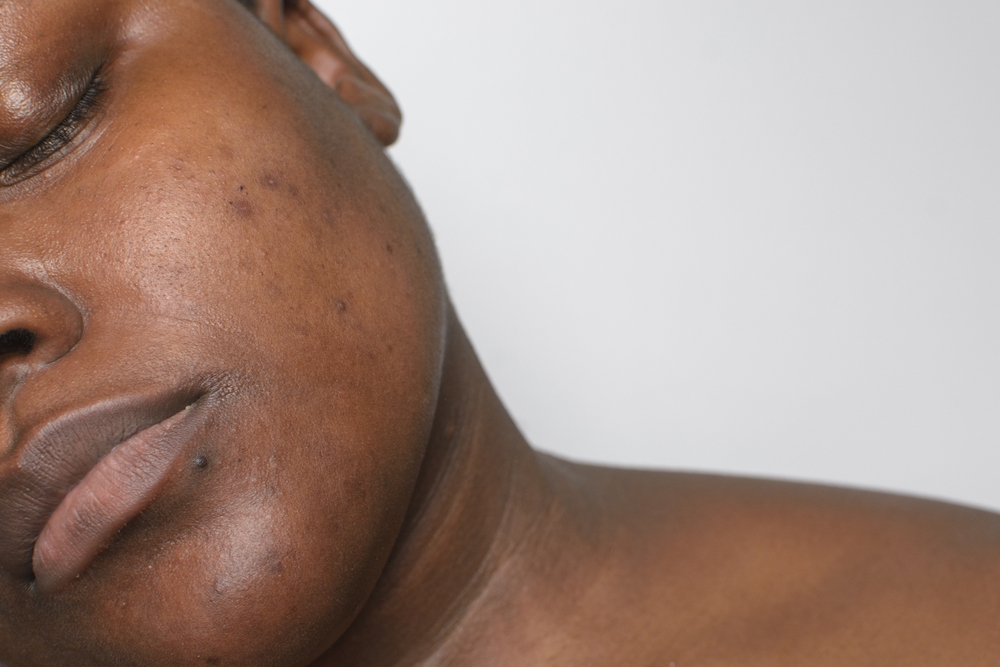
Dark patches on your face can be frustrating. They often seem to appear out of nowhere and then they gradually become more noticeable.
If you have a darker skin tone, you may also notice that discoloration lingers longer than you’d like.
Though many conditions can cause dark patches on the face, melasma is the most common culprit. It can affect anyone, but people with melanin-rich skin have a higher risk.
The good news? Melasma on dark skin is treatable.
What Does Melasma on Dark Skin Look Like?
Melasma looks different from person to person. On darker skin tones, it may appear as brown, deep brown, or gray-brown symmetrical patches.
They may appear across both cheeks, along the forehead, over the bridge of the nose, or around the chin. In some cases, pigmentation can develop on the neck or forearms.
The shape and location of these patches is an important part of figuring out if you have melasma or not.
Not every dark patch is caused by this skin condition. Acne marks, sun spots, and other types of hyperpigmentation can look similar.
What Can Trigger or Worsen Melasma?
There are many different factors that can trigger dark patches to appear on the skin. Hormones play one of the biggest roles. Pregnancy, birth control pills, and hormone therapy have all been linked to melasma.
Sun exposure is another major factor, which is why daily sun protection is so important.
Other factors that can trigger melasma include:
- Heat
- Skin irritation and inflammation
- Harsh skincare products
- Stress
- Lack of quality sleep
- Certain medications
Why Darker Skin Needs a Thoughtful Treatment Plan
Darker skin contains more melanin, which means it’s more prone to hyperpigmentation, especially after inflammation or irritation. Treatments that create controlled injury to the skin can sometimes worsen discoloration if they’re used too aggressively.
Careful treatment selection is a must, especially when considering options like chemical peels, microneedling, IPL, or laser resurfacing.
Before recommending a treatment plan, one of our dermatologists will carefully examine your skin, discuss your triggers, and discuss any previous products or treatments that you’ve tried.
What Treatments May Help?
Before treatment begins, your dermatologist must first determine the type and extent of pigmentation. A Wood’s Lamp examination may be used to get a better idea of how deeply the pigment extends into the skin.
Prescription topical treatments are commonly used to treat melasma on dark skin. We commonly use hydroquinone creams and topical steroids as first-line options.
If topical treatment doesn’t produce optimal results, other options may be considered. Chemical peels, microdermabrasion, microneedling, IPL, or laser resurfacing can all help soften the appearance of melasma patches.
Melasma on Dark Skin: Maintenance is Important
Melasma can be stubborn. Even when patches are less noticeable, the triggers that cause them may still be lingering.
To help keep your skin looking it’s best, ensure you wear broad-spectrum SPF 30 or higher, even on cloudy days. This is key for protecting your skin against harmful UV rays. Skipping sun protection makes it much harder to maintain your results.
You’ll also want to:
- Use gentle skincare products
- Managing hormonal factors
- Avoid excess heat
- Limit exposure to blue light
Most important, work with the team at Acworth Dermatology to create a long-term treatment plan. Continued maintenance and periodic treatments can help prevent pigment issues from reappearing.
Your Melanated Skin Deserves the Best Care
At Acworth Dermatology, Dr. Johnathan L. Chappell and his team provides individualized care for pigmentation concerns and other skin conditions.
Don’t let melasma keep you from feeling and looking your best.
Contact us online or give our office a call at 678-505-8030 to book a consultation with Dr. Chappell.
Who is Dr. Johnathan Chappell?
Dr. Johnathan Langston Chappell, MD is a double board-certified dermatologist and Mohs surgeon practicing at Acworth Dermatology & Skin Cancer Center in Acworth, Georgia.
Education & Academic Background
- Undergraduate: Graduated magna cum laude with a Bachelor of Science in Biology from Morehouse College, where he was inducted into the Phi Beta Kappa honor society.
- Medical School: Earned his medical degree from Morehouse School of Medicine.
- Internship: Completed at the University of South Alabama.
Residency & Specialized Training
- Residency: Trained in dermatology at Howard University Hospital in Washington, DC, spending over half of his residency at the Washington VA Medical Center treating diverse skin types in medical and cosmetic dermatology.
- Fellowship: Completed a fellowship in Mohs micrographic surgery at the Northwestern Skin Cancer Institute in Chicago under the supervision of Drs. Brian Cook and Jean Christophe Lapiere.
Credentials & Recognition
- Double-board certified in Dermatology and Mohs Surgery.
- Fellow of the American Academy of Dermatology (FAAD).
- Named among Atlanta Magazine’s Top Doctors of Atlanta and consistently recognized as a Castle Connolly Top Doctor.