


When it comes to skin cancer, early detection can save your life. If you’ve been searching for more information to stay vigilant, you’re not alone.
Melanoma, the most serious form, can spread quickly if left unchecked, yet it is highly treatable when found early.
The ABCDE of Skin Cancer is a simple guide you can use to spot warning signs and take action right away.
When it comes to your health, there is little substitute for being informed. This quick but informative guide will have you feeling more prepared than ever before to get the care you deserve.
Why the ABCDE of Skin Cancer Method Matters
Melanoma often begins as a mole that changes over time. And if you’re not paying close attention, it can happen quicker than you think.
Some changes are harmless, but others can signal cancerous growth.
The ABCDE method offers an easy way to remember what to look for.
Checking your skin regularly with this guide can help you catch melanoma in its earliest stage, before it can become more dangerous.
The ABCDE of Skin Cancer: What to Look For
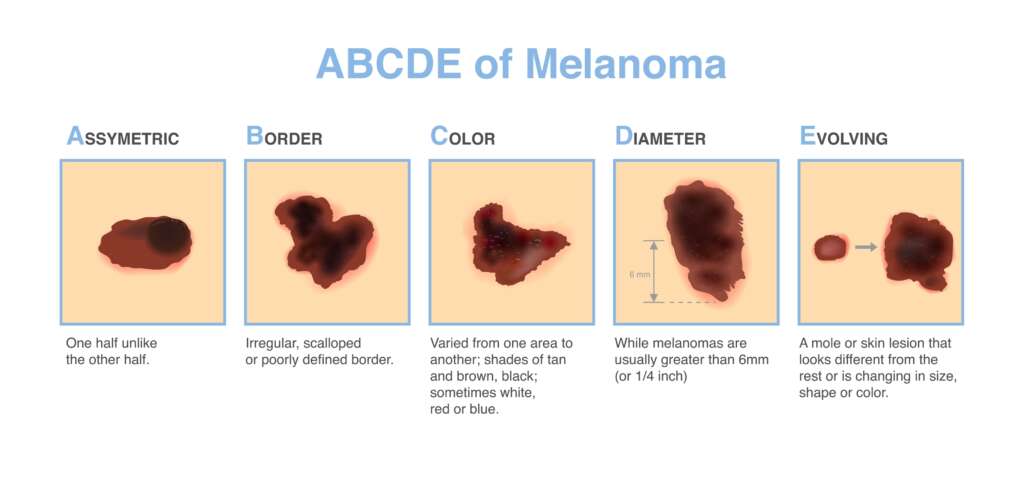
Here is how the ABCDE method works:
- A – Asymmetry: One half of the mole does not match the other half in shape or color.
- B – Border: Edges are irregular, blurred, or jagged instead of smooth.
- C – Color: Multiple colors or uneven shades of brown, black, red, white, or blue in one spot.
- D – Diameter: A mole larger than 6 millimeters (about the size of a pencil eraser).
- E – Evolving: Any change in size, shape, color, or texture, or new symptoms like itching or bleeding.
If you notice one or more of these signs, it is time to have the spot checked by a dermatologist.
How Often Should You Check Your Skin?
A monthly self-exam is ideal for most people. Stand in a well-lit room with a mirror, and use a hand mirror for hard-to-see areas like your back and scalp.
Helpful tips:
- Take photos of moles you are watching for future comparison.
- Look at your palms, soles, and between your toes and fingers.
- Ask a loved one to help with areas you cannot see well.
Who is at Higher Risk?
While melanoma can happen to anyone, certain factors increase risk:
- Fair skin, light eyes, or light hair
- History of severe sunburns, especially in childhood
- Family or personal history of skin cancer
- Frequent use of tanning beds
- High number of moles or unusual moles
- Weakened immune system
Knowing your risk can help you stay more vigilant about skin checks and sun protection. Just knowing what to look for is a huge step in the right direction.
Prevention You Can Practice Daily
You can lower your risk by:
- Wearing broad spectrum SPF 30 or higher daily, reapplying every two hours outdoors
- Seeking shade during peak sun hours
- Wearing UV-blocking sunglasses, wide-brimmed hats, and protective clothing
- Avoiding tanning beds entirely
- Scheduling routine skin exams with a dermatologist
Take these simple steps to ensure you’re on a safer path.
The Power in Your Hands, Now That You Know the ABCDE of Skin Cancer, Know Your Next Step
If you have a mole or spot that matches any part of the ABCDE of Skin Cancer, do not wait for it to get worse.
Professional evaluation can make all the difference. For thorough skin exams and personalized care, contact Acworth Dermatology & Skin Cancer Center.
Our team at Acworth Dermatology & Skin Cancer Center are dedicated to meeting all of our patients with compassion, professionalism, and the kind of expert care everyone deserves.
Contact us online or call us at 678-505-8030 today, and take a confident step toward protecting your skin and your health.